Best time to buy a TV in India: Should you wait for a sale?
The best time to buy a TV in India is the festive sale, led by Flipkart Big Billion Days. Flickly’s 2026 study found that 68% of TV buyers bought in a sale.
In brief
The best time to buy a TV in India, for most buyers, is the festive sale season. Around 2 in 3 TV buyers bought in a festive sale such as Flipkart Big Billion Days or the Amazon Great Indian Festival. However, the sale rarely changed which TV they bought, and sale buyers were three times as likely to face a late delivery or delayed installation.
- Around 68%Bought their TV in a festive sale such as Flipkart Big Billion Days or the Amazon Great Indian Festival.
- Around 41%Of sale buyers would have bought at the same time even without the sale.
- 48% vs 16%Of sale buyers and other buyers had a late delivery or a delayed installation.
What did the TV buying behaviour study find?
- Festive sales mostly change where people buy a TV, not which TV they buy.
- Flipkart Big Billion Days leads, but store-chain sales from Vijay Sales, Reliance Digital and Croma win more than a quarter of sale purchases.
- Most stores turn down requests to match online prices, and the shopper then buys online.
- Ratings and reviews push TV buyers far more than deadlines or no-cost EMI.
- Delivery and installation problems rise sharply in sale weeks, online and in stores alike.
| Measure | Base, Share |
|---|---|
| Bought their TV in a festive sale | All buyers, Around 68% |
| Waited for a sale before buying | All buyers, Around 57% |
| Would have bought at the same time without the sale | Sales buyers, Around 41% |
| Would not have bought a TV without the sale | Sales buyers, Around 5% |
| Bought in Flipkart Big Billion Days | All buyers, Around 22% |
| Bought in the Amazon Great Indian Festival | All buyers, Around 9% |
| Price-match requests turned down by stores | Shoppers who asked, Around 82% |
| Pushed by ratings and reviews | Sales buyers, Around 57% |
| Pushed by no-cost EMI | Sales buyers, Around 6% |
| Had a late delivery or delayed installation | Sales buyers, Around 48% |
| Had a late delivery or delayed installation | Non-sale buyers, Around 16% |
| Checked the brand’s own website | All buyers, Around 53% |
| Bought on the brand’s own website | All buyers, About 10% |
Base: TV buyers in urban Tier 1 and Tier 2 India, 2026. Source: Flickly.
Is it worth waiting for a festive sale to buy a TV?
Waiting for a festive sale is normal for TV buyers in India, but it rarely changes the TV they buy. Around 57% of buyers waited for a sale, and most of them waited two weeks or less. Without the sale, around 4 in 10 sale buyers would have bought at the same time anyway, about 1 in 3 would have bought later, and only about 5 in 100 would not have bought a TV at all.
| What sale buyers would have done without the sale | Share of sale buyers |
|---|---|
| Bought at around the same time | Around 41% |
| Bought later | Around 35% |
| Bought a cheaper TV | Around 15% |
| Not bought a TV | About 5% |
| Not sure | About 4% |
Base: TV buyers who bought in a festive sale, urban Tier 1 and Tier 2 India, 2026. Source: Flickly.
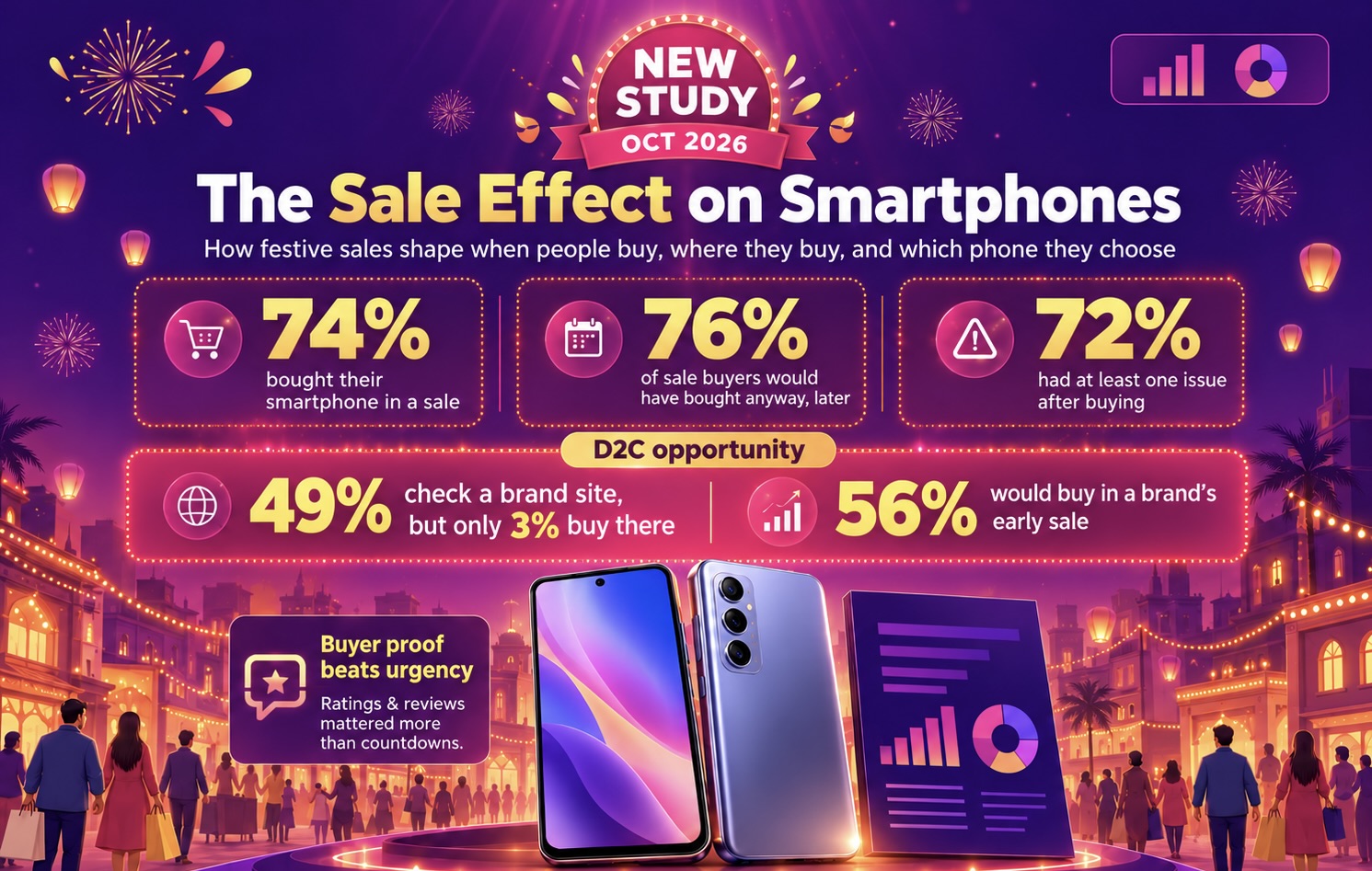
The sale also did not lead to bigger TVs. Sale buyers ended up with a better or bigger TV than planned no more often than other buyers did. Smartphones work differently, because smartphone sale buyers upgraded far more often than other buyers.
Which festive sale do TV buyers use most, Big Billion Days or the Great Indian Festival?
Flipkart Big Billion Days is the festive sale most TV buyers use. Around 22% of all TV buyers bought in Big Billion Days, compared with around 9% in the Amazon Great Indian Festival. Among buyers who knew each sale, Big Billion Days turned about twice as many into purchasers.
TV festive sales are not only online. Store-chain sales from Vijay Sales, Reliance Digital and Croma won more than a quarter of sale purchases, and a brand’s own sale won about 1 in 7. A Vijay Sales sale and a brand’s own sale each won about as many TV buyers as the Amazon Great Indian Festival, even though far fewer people knew about them.
Do stores match online TV prices?
Most stores do not match online TV prices. About 2 in 3 shoppers who looked at a TV in another store asked it to match an online price, and around 8 in 10 of those requests were turned down. Almost every shopper who was refused then bought online, while shoppers whose price was matched usually bought in the store.
Stores show the TV to many buyers but then lose the sale on price. Around 2 in 3 TV buyers saw their TV in a store before buying, and nearly 9 in 10 store buyers also checked prices online. Online buyers chose mainly on price and offers, while store buyers chose mainly on trust and service.
What makes people buy a TV in a sale?
Ratings and reviews make people buy a TV in a sale more than any discount or deadline. Reviews pushed around 57% of sale buyers, bank and card discounts around 37%, and countdown or “ends tonight” messages about 1 in 5.
| What pushed the TV purchase | Share of sale buyers |
|---|---|
| Ratings and reviews | Around 57% |
| A bank or card discount | Around 37% |
| A big “% off” next to a crossed-out price | Around 33% |
| A free gift | Around 24% |
| A countdown or “ends tonight” message | Around 19% |
| No-cost EMI | About 6% |
Base: TV buyers who bought in a festive sale, urban Tier 1 and Tier 2 India, 2026. Source: Flickly.
Flickly also tested sale banners, and no version did better than a plain “15% off today”. This included a midnight deadline and a count of other buyers. More than half of buyers say a deal ending makes them buy, yet most sale buyers who say this were not pushed by a countdown in their own purchase.
No-cost EMI was the weakest push of all. Industry analysts expect financing options like EMIs to help the premium segment of 45 inches and above stay resilient, but among TV buyers in this study, fewer than 1 in 10 sale buyers named no-cost EMI as a reason to buy.
What would bring TV buyers to a brand’s own website?
Faster delivery would bring more TV buyers to a brand’s website than anything else. Around 53% checked the brand’s own website before buying, but only about 1 in 10 bought there, and nearly all of those bought in the brand’s own sale. Faster delivery, a genuine-product promise with official warranty and an extra 5% off together appeal to nearly 8 in 10 buyers.
Timing divides buyers. About half would buy in a brand’s own sale held a week before the big sale, and about half would wait. A small price gap does not move TV buyers either, because only about 7 in 100 would switch to another trusted brand for an extra 5% off or less.
How was this study designed?
Flickly ran a quantitative online survey in 2026 among men and women who had recently bought a TV, across urban Tier 1 and Tier 2 cities in India. Each figure shows what buyers in the study did and said. It is not a measure of market size.
The full report, The Sale Effect: TV, covers sale-by-sale conversion, the banner and offer tests, the offer premium TV buyers prefer, store price matching, delivery and installation problems by channel, brand switching thresholds and prioritised recommendations for brands, marketplaces and retailers.
Get the full report
Frequently asked questions
Find out what Big Billion Days and the Great Indian Festival do for your TV brand.
The full report covers sale-by-sale conversion, the banner and offer tests, store price matching and prioritised recommendations for brands, marketplaces and retailers.

Turn consumer opinions into confident market decisions
Get market-ready consumer insights in as little as 72 hours.