Tesla Roadster flying car: Will people actually buy it?
Tesla’s Roadster can fly, but will consumers buy it? What reservations, pricing and consumer research reveal about real demand for a product nobody has used.
In brief
The new Tesla Roadster is an electric sports car that can briefly fly using thrusters and accelerate from 0 to 60 mph in under a second. Tesla unveiled it at a SpaceX test site, and Elon Musk said production will start in 2028. No price has been announced, although the 2017 version was listed at $200,000. For consumer brands, the launch is a clear example of the gap between excitement and purchase, and of why demand has to be measured with real buyers rather than video views.
What is the Tesla Roadster flying car?
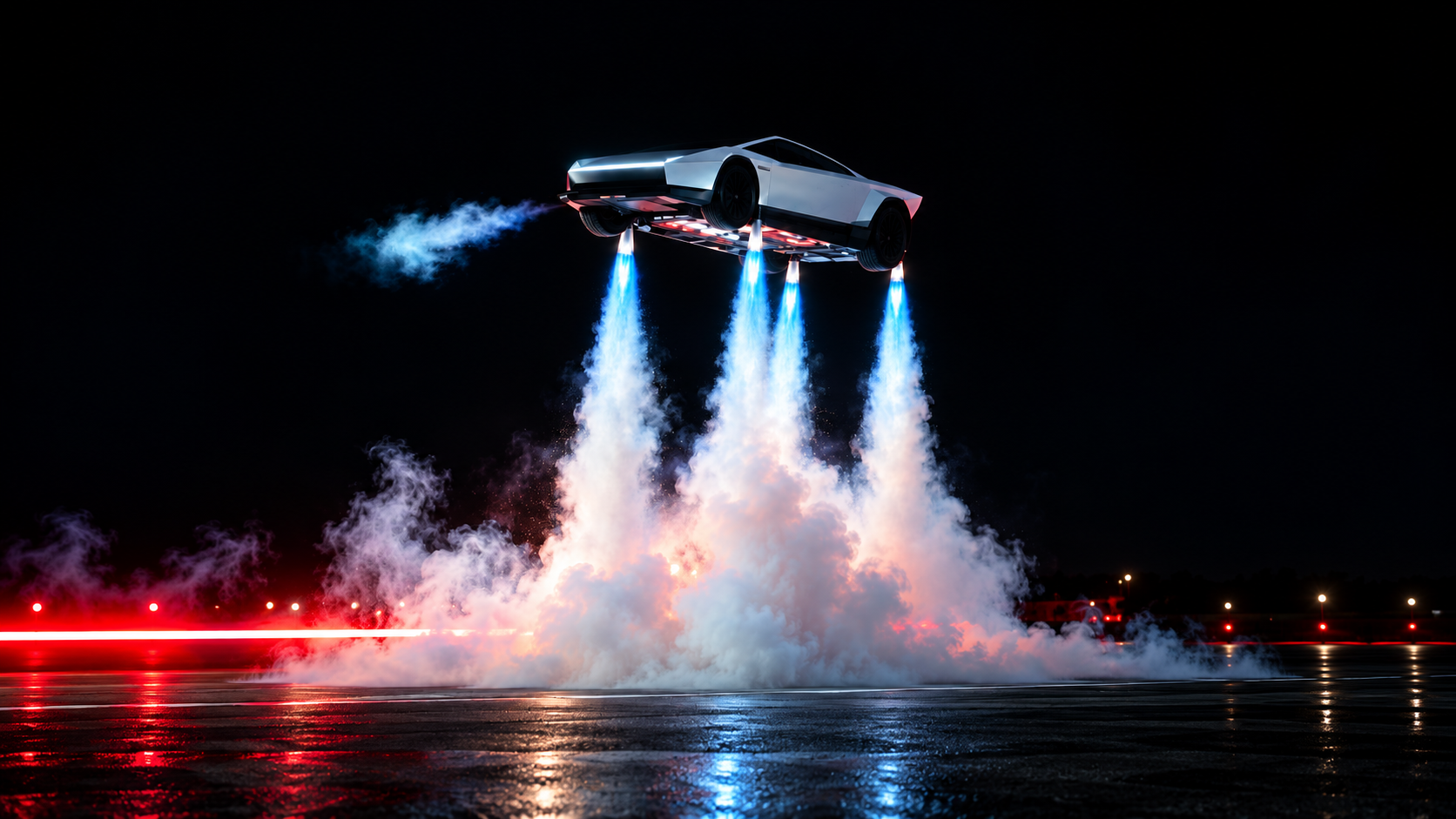
The Tesla Roadster flying car is the second-generation Tesla Roadster, which Tesla showed briefly lifting off the ground at a SpaceX facility. Tesla officially unveiled the new Roadster on 15 October 2026 at a livestreamed event at a SpaceX test site in McGregor, Texas. During the event, the car used compressed-air thrusters to fly off a ramp and flip in mid-air.
After the event, Elon Musk shared the demo on X, claiming that the future does have flying cars after all.
How fast is the new Tesla Roadster?
The new Tesla Roadster accelerates from 0 to 60 mph, about 0 to 97 km/h, in under one second:
- Acceleration: Tesla first quoted 0 to 60 mph in one second flat, then showed a video of the car doing it in 0.81 seconds.
- Top speed: More than 230 mph, or about 370 km/h.
- Grip: Fans under the car pull it towards the road, giving it extra grip when accelerating and cornering.
What is the Tesla Roadster price?
Tesla has not announced a price for the new Roadster. Musk gave a production date of 2028 at the unveil, but no price.
The only official prices date from 2017, when Tesla first showed the second-generation Roadster:
- Base model: $200,000, with a $50,000 deposit to reserve a car.
- Founders Series: $250,000, limited to 1,000 cars and paid in full when reserving.
Tesla Roadster Flying Car Launched In India
| Variant | Price (Deposit Only) |
|---|---|
| Performance | ₹ 50.06 lakh |
| Thrust | ₹ 2.50 crore |
| Rocket | TBA |
Post production starting in 2028, you can expect to see the Tesla Roadster on Indian roads a year after it. The Rocket is an invite-only model, and is currently not approved for public road use.
Is there real consumer demand for flying cars?
There is strong consumer interest in flying cars, but interest is not the same as demand. Interest means people want to watch, share and talk about a product. Demand means enough of them will pay for it, at a price that works, when they could buy something else instead.
The Roadster demo shows how far apart the two can be. A video can reach millions of people in a day. Yet the number of people who could afford a supercar, would trust it to fly, and live somewhere it would be allowed to fly is far smaller. Only research with genuine buyers can show how much smaller.
What would stop consumers from buying a flying car?
Consumers weigh a flying car against five concerns that excitement alone can’t overcome:
- Safety: Whether they would trust it with their family inside.
- Rules: Where it would actually be allowed to fly, and who would approve it.
- Price: How much more flight is worth to them than speed alone.
- Ownership: Who would service it, and how it would be insured.
- Real use: Whether they would use the flying feature regularly, or only once to show it off.
Musk himself raised one of these concerns before this launch, saying flying cars would be noisy and would not make anyone feel less anxious. Concerns like these are often what decide whether interest turns into a purchase. Measuring which of them matters most is a research question, not a guess.
What do Tesla Roadster reservations reveal about demand?
Tesla Roadster reservations are one of the few public signals of real demand, because they ask people to commit money rather than attention. When reservations opened in 2017, a standard car needed a $50,000 deposit, and Founders Series buyers paid $250,000 upfront.
A deposit filters out casual interest in a way no view count can. Someone who pays $50,000 has made a decision, while someone who shares a video has only reacted to it.
Reservations still leave big gaps. They come only from the most committed fans. They show nothing about why everyone else is holding back, and they don’t reveal which feature or price would bring more buyers in. Filling those gaps is the job of consumer research.
Why does hype overstate consumer demand?
Hype overstates consumer demand because reacting to a product is free, while buying it is not. Three things widen the gap between the two:
- Saying yes costs nothing: Agreeing that a flying car sounds exciting carries no price, so interest always runs ahead of intent.
- The wrong people react: Many of those excited by the Roadster could never buy a car in its class, so their reactions inflate apparent demand.
- Novelty fades: Dramatic new products draw attention that often drops once buyers compare them with cheaper, more practical options.
The same pattern affects every category. A new snack, skincare product or appliance can trend online and still sell poorly, because the people reacting were never the people buying.
How much would consumers pay for a flying car?
Nobody knows yet, because Tesla has not announced a price for the new Roadster. The only official figures date from 2017, when the base model was listed at $200,000 and the Founders Series at $250,000. Tesla later removed those prices from its website.
A brand in Tesla’s position would want to know what flight is worth to a buyer, in money. Pricing research can answer that. It can show which prices buyers find too cheap, good value, expensive or too expensive, and how much more they would pay for one feature over another. Without it, a launch price is a guess, and a wrong guess can mean prices that later have to be withdrawn.
How do brands measure consumer demand for a new product?
Brands measure consumer demand for a new product by asking genuine buyers to judge it, rank its features and choose between real options, including price. Four methods do most of the work:
- Concept testing: Shows buyers a description or picture of the new product and measures how appealing, believable and different they find it. This separates genuine interest from curiosity.
- MaxDiff analysis: Ranks a list of features, benefits or worries by importance. For a flying car, it would show whether safety, price, noise or rules matter most.
- Conjoint analysis: Shows buyers complete product options with different features and prices, and measures what each feature is worth to them in money.
- Price testing: Asks buyers which prices feel acceptable and which feel too high, to find the range they would accept.
All four follow the same rule. Survey real buyers in the category, screen out people who could never buy, and check answers for quality, because rushed or careless responses make every product look more popular than it is.
Each method is explained in Flickly’s guides to concept testing, MaxDiff analysis and conjoint analysis.
Would Indian consumers buy a flying car?
Whether Indian consumers would buy a flying car hasn’t been measured. Tesla hasn’t announced plans to sell the new Roadster outside the US, so there is no India price or launch to react to.
If a product like this did come to India, research with Indian buyers would need to answer three questions the US launch can’t:
- Where it could be used: Indian cities have dense traffic and strict airspace rules, so the value of a flying feature would depend on where it is allowed.
- What it would be worth: Premium car buyers in India weigh price against status, safety and after-sales service. Conjoint analysis would show how much flight changes that balance.
- Who the real buyers are: Interest from car fans is not the same as intent from people who can afford a car in this class, and only screening can tell them apart.
What can brands learn from the Tesla Roadster launch?
The Tesla Roadster is an extreme case, but its lessons apply to any new product, from a snack to a skincare range:
- Attention is not demand: A launch that goes viral still has to prove that people will pay for it.
- Measure commitment, not reaction: The most useful questions make buyers choose, rank or trade off, the way they would in a real purchase.
- Ask the right people: Results from people who would never buy in the category make a product look stronger than it is.
- Test the price before announcing it: Prices that have to be withdrawn later cost a brand credibility.
- Test while interest is high: Reactions are clearest around a launch, so fast research gives the most useful read.
Testing consumer demand on Flickly
Flickly helps brands measure consumer demand for new products before launch, using concept tests, MaxDiff, conjoint analysis and price testing. Studies run on a panel of more than 65 million verified consumers, every response is scored for quality, and findings arrive in 72 hours.
Frequently asked questions
Flickly on RankCert
Check us out at RankCert.


Run your next study with verified Indian consumers
Design the study, reach the right respondents, and get decision-ready insights in 72 hours.