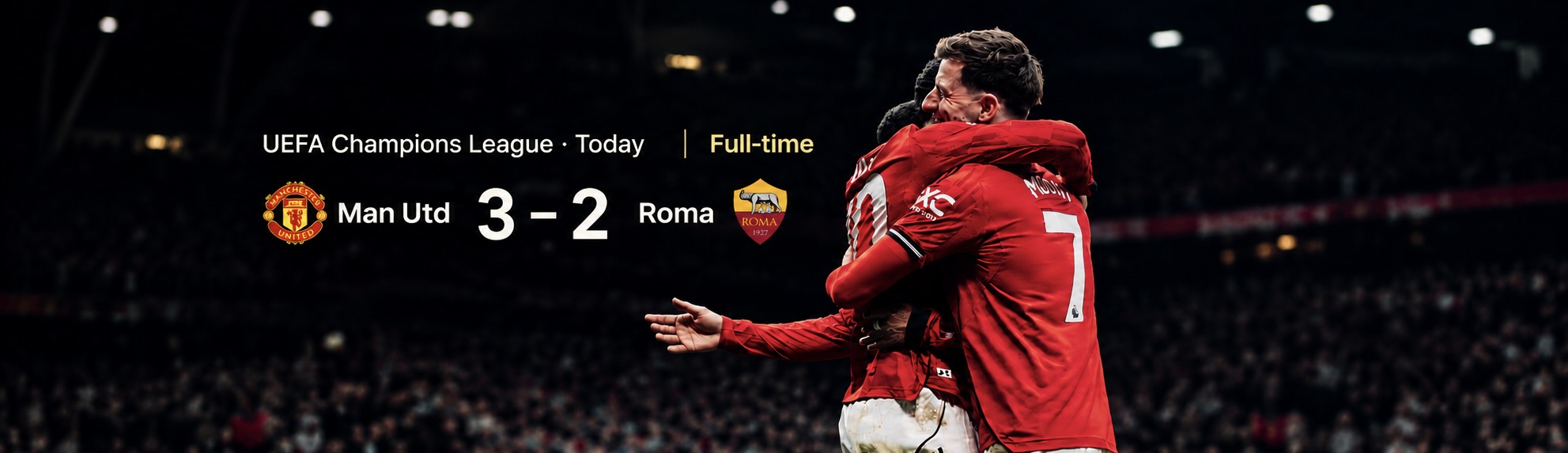
Man Utd vs Roma 2026: What the comeback tells brands about football fans
Man Utd beat Roma 3-2 in the 2026 Champions League after trailing 2-0. What the comeback tells brands about fan sentiment and the Premier League season ahead.
In brief
Manchester United beat Roma 3-2 at Old Trafford on 3 November 2026 after trailing 2-0, ending a nine-game winless run.
- Fan mood swung from frustration to celebration in one evening. For brands, the lesson is simple: Fan sentiment moves with results, so a sponsorship can’t be judged on a single match.
- The brands that get the most from football measure settled opinion over the season, compare fans with non-fans, and plan research around the moments that will move fans next.
- Matheus Cunha was the star man and hero of the comeback victory, scoring a decisive second-half brace to lead Manchester United to a 3–2 win over Roma in the Champions League
What happened in Man Utd vs Roma?
Manchester United came from 2-0 down to beat Roma 3-2 in matchday 4 of the 2026-27 Champions League league phase (Sports Illustrated).
- A record early collapse: Roma’s two goals in 18 minutes were the earliest a visiting team had scored twice at Old Trafford in a major European competition (cites Sports Illustrated).
- The comeback: United scored three goals in 28 minutes after half-time to end a nine-game winless run in all competitions (Football365).
- Criticism even in victory: Wayne Rooney, commentating on Amazon Prime, criticised captain Bruno Fernandes for his part in Roma’s opening goal (Football365).
Why does fan sentiment matter to brands?
Fan sentiment matters because football fans don’t separate how they feel about a club from how they feel about the brands around it. Shirt sponsors, kit makers, streaming partners and brands running football advertising all depend on it.
European football has a large following in India, especially among young, urban audiences. That makes clubs like Manchester United valuable to Indian and global brands, and it also means a club’s bad run can rub off on its partners.
Brands need to separate two kinds of sentiment:
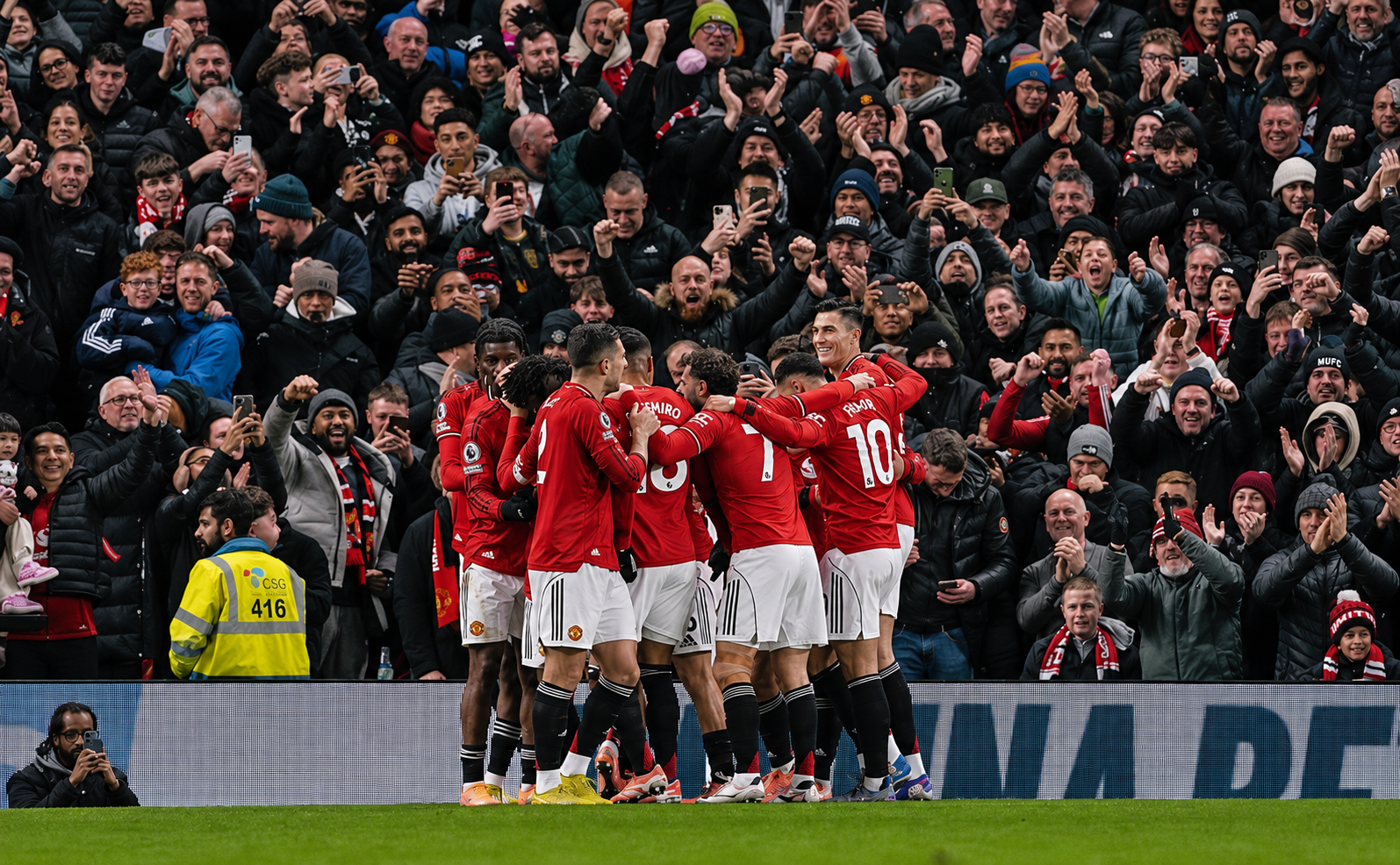
- Reaction: How fans feel during and just after a match. It is loud, emotional and short-lived.
- Settled opinion: How fans feel once the result has sunk in. It changes slowly and is a far better guide to what they will buy.
How do brands measure fan sentiment?
Brands measure fan sentiment with three methods, each answering a different question.
| Method | What it shows | Limit |
|---|---|---|
| Social listening | What fans post during and after matches | Only covers fans who post, and the loudest dominate |
| Fan surveys | What a representative group of fans thinks and plans to buy | Takes days rather than minutes |
| Brand tracking | How opinion of a sponsor changes over a season | Needs repeated waves to show change |
Social listening spots the moment, and surveys explain it. A spike in posts after the Roma comeback shows fans reacted. Only a survey shows whether that reaction changed how they see the club’s partners.
How do sponsors measure football sponsorship value?
Sponsors measure football sponsorship value by comparing fans with similar non-fans on four measures, then tracking the gap across a season:
- Sponsor awareness: Whether fans can name the sponsor without being prompted.
- Brand association: Whether fans link the sponsor with what the club stands for.
- Brand opinion: Whether fans rate the sponsor more highly than non-fans do.
- Purchase intent: Whether fans are more likely to buy the sponsor’s products.
If fans and non-fans rate a sponsor the same, the sponsorship isn’t working. A gap that grows across the season is the clearest sign it is.
What can brands expect for the rest of the 2026-27 season?
Brands can expect fan sentiment to keep swinging, and the brands that plan their research around the next turning points will read it best. Four trends are worth watching:
- Manager changes will reset fan mood: Before the Roma game, United’s manager was reported to be under pressure to save his job (Sports Illustrated), and talk of an incoming manager followed the win (Football365). A new manager usually brings a short burst of optimism, which is a good moment to measure sponsor sentiment.
- Streaming is changing where fans watch: The Champions League now reaches many fans through streaming platforms such as Amazon Prime (Football365). Brands should research where their target fans actually watch, not just which club they support.
- Casual fans are growing after the 2026 World Cup: A World Cup year brings in viewers who follow the biggest games but not every match. Surveys should separate casual viewers from dedicated fans, or casual opinion will dilute the results.
- The January transfer window and the title run-in are the next big moments: Signings, sales and late-season results all move fan mood. Brands should plan survey waves before and after these points to see how fans respond.
How to research football fans
Football fan research works best when it follows four rules:
- Screen for real fans: Separate dedicated fans from casual viewers by asking how often they watch.
- Time surveys on purpose: The morning after a big match measures reaction. Mid-week measures settled opinion.
- Track in waves: Ask the same questions at several points in the season, so changes can be tied to results, signings or campaigns.
- Look beyond metro cities: Football following is growing in Tier 1 and Tier 2 cities, so include them and read the results separately.
Flickly runs fan surveys, sponsorship studies and brand tracking on a panel of more than 65 million verified consumers. Every response is checked for quality, and findings arrive in 72 hours, fast enough to measure a moment like the Roma comeback while fans still remember it.
Frequently asked questions


Run your next study with verified Indian consumers
Design the study, reach the right respondents, and get decision-ready insights in 72 hours.